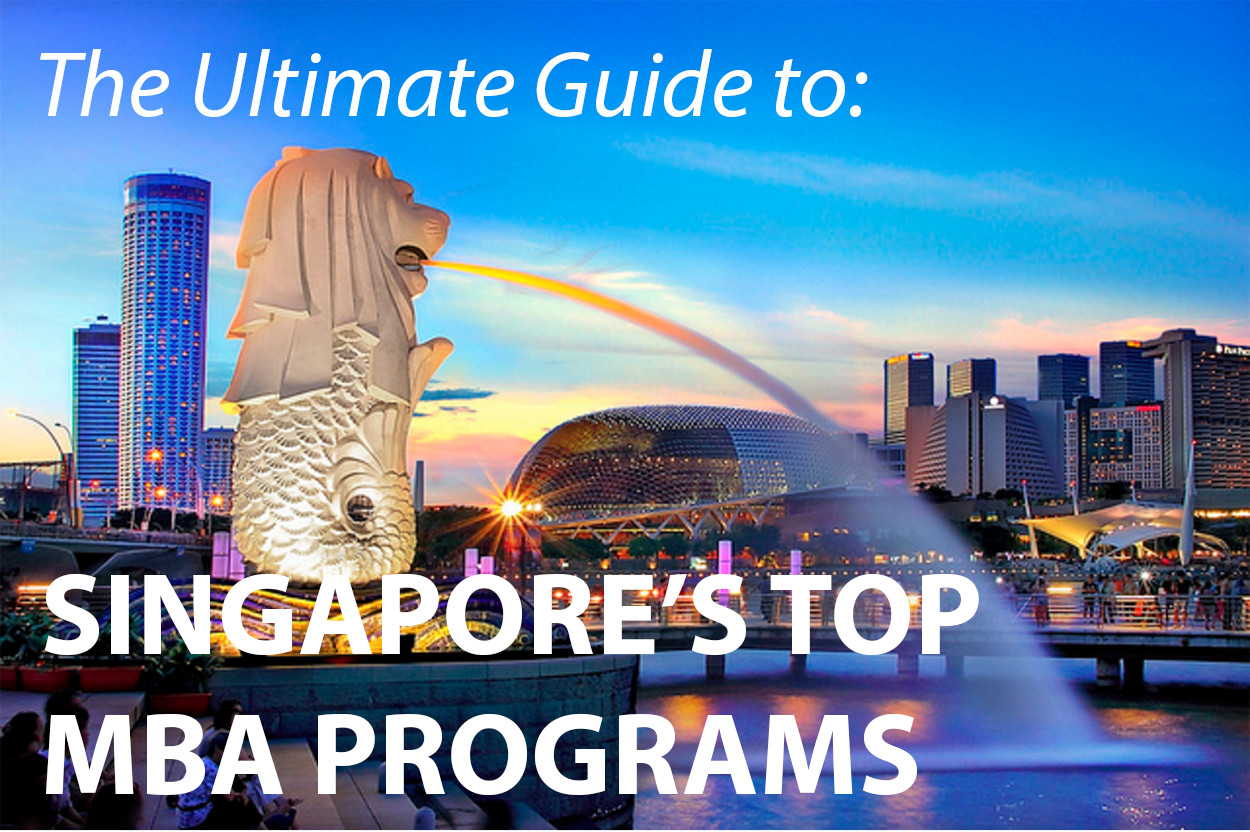
Looking for the best MBA programs in Singapore? Here’s your ultimate guide. Read on to compare the Singapore’s best Full-time MBA programs head-to-head and get the inside scoop from Admissions Directors, MBA alumni and more from Singapore’s best MBA programs. All on one page!
last updated February 2026
-
Why Singapore for Your MBA?
-
Snapshot of Top MBA Programs in Singapore
-
Top Full-time MBA Programs in Singapore
-
In-Depth Podcast Interviews with MBA Admissions Directors from Singapore’s Top Business Schools
-
MBA Students & Alumni Share What’s It Really Like at Top Singapore MBA Programs
-
Post-MBA Career Opportunities in Singapore – Visas, Industries, and More
-
INSEAD MBA vs. NUS MBA vs. Nanyang MBA vs. SMU MBA – In-Depth Head-to-Head Comparison
-
Get Help Finding Your Best-Fit MBA Program in Singapore
Why Singapore for your MBA?
1. Singapore is home to 7,000+ MNCs, nearly half of whom have chosen Singapore as their Asia Pacific headquarters. Singapore is perennially ranked as one of the world’s easiest places to conduct business.
2. A highly developed, modern, cosmopolitan city (30% of the population are non-residents), and long-time conduit between East and West, the island city-state benefits from a multi-cultural society of Chinese, Malays, Indians, Eurasians and expatriates. The national language is English, making it a convenient place for foreigners to get situated in Asia.
3. Deloitte ranked Singapore as the world’s 2nd best wealth management centre (2024); Singapore is the 5th largest wealth management centre by international market volume, and the fastest growing cross-border wealth booking centre (2025), fueled by strong inflows from China, India and ASEAN countries.
4. Singapore has one of the lowest unemployment rates in the world (2.1% for 2026), and given its developed economy and English-speaking business culture, is likely the easiest Asian country for MBA graduates to gain employment.
5. The downside of Singapore’s economic growth is that living costs have also risen, and it is now the most expensive city in the world (Julius Baer Global Wealth & Lifestyle Report 2025).
Snapshot of Top MBA Programs in Singapore
| MBA Program (Location) | Length | Class Size | Tuition | Starting Salary | Salary after 3 Years |
|---|---|---|---|---|---|
| INSEAD MBA (Singapore campus) | 10 months | 900-950 | €109,860 (~164,000 SGD) | €102,000 (~$120,000 USD) | $220,000 USD |
| NUS MBA | 12 or 17 months | 120 | 99,953 SGD | $88,000 USD | $181,000 USD |
| Nanyang MBA | 12 months | 80 | 89,380 SGD | Not available | $195,000 USD |
| SMU MBA | 15 months | Not available | 82,840 SGD | Not available | $156,000 USD |
Top Full-Time MBA Programs in Singapore
Click on school name to get full writeups and in-depth podcast interviews exploring what makes each program unique.
Insead MBA
- Insead’s MBA was ranked #2 worldwide by the Financial Times (2026). Established in 1957, Insead has a reputation for being one of the best MBA programs outside the US.
- Arguably the world’s most global MBA program with over 90 nationalities; one of the few MBA programs to place a sizable percentage of graduates in Europe (45%), Asia (23%), Middle East/Africa (18%), South America (9%) and North America (6%)
- 10-month general management MBA program with 2 intakes (January, August), 2 main campuses (France, Singapore) and nearly 1,000 students/year
- Sends 50% of graduates into consulting industry; hundreds of graduates work for McKinsey, Bain and BCG, Insead’s top 3 corporate recruiters
NUS MBA
- The National University of Singapore (NUS) is Singapore’s flagship and most prestigious university, ranking 8th internationally and 1st in Asia by QS (2026); it is also Singapore’s most comprehensive university with 15 colleges & faculties, offering interdisciplinary breadth and access
- Flexible 12 or 17-month program with 120 students/intake
- Highly customizable, with 9 specialization tracks in Analytics & Operations, Consulting, Digital Business, Innovation & Entrepreneurship, Finance, Innovation & Entrepreneurship, Marketing, Real Estate, Strategy & Organization, Healthcare Management
- Strong exchange possibilities with 60+ partners and numerous dual degree options across Asia and Europe
- Consistently ranked top 30 worldwide by the Financial Times
Nanyang MBA
- Nanyang Technological University (NTU or Nanyang) has steadily climbed the Financial Times Rankings the past 3 years, ranking #12 globally in 2026, higher than any other Singapore business school.
- NTU was ranked 12th internationally and top 3 in Asia by QS (2026). NTU has a strong reputation for engineering and accounting, and also has an outstanding reputation in China
- Recently changed to 12-month format with 6 specialization tracks in Banking & Finance, Strategy & Innovation, Marketing Management, Business Analytics, Sustainability & Innovation and General Management
- As of the latest Financial Times Rankings in 2026, Nanyang MBA graduates had the highest average salary 3 years after graduation ($195,000) for local Singapore business schools. Combining this with its 1-year format catapulted Nanyang to rank #2 worldwide for ROI.
- More project focused: students required to take less courses (9 core, 4 electives) but must complete 1 leadership module, 1 business study mission and 1 live consulting project
SMU MBA
- Singapore Management University (SMU) is a business and management focused university, modeled after Wharton, that opened in 2000. Located in the heart of the city, it’s known for equipping graduates with strong soft skills and its close ties with Singapore’s business community. The university offers students a recruiting network of 3,000 companies worldwide.
- 15-month general management MBA with 60 students per year (12-month fast-track also available)
- An up & coming university – SMU undergraduates are among Singapore’s highest paid, and the university has opened a dazzling amount of business related Masters programs the last few years
- SMU’s MBA program is only 15 years old, but is already ranked #57 in the Financial Times (2026), and the Lee Kong Chian School of Business has already been triple accredited by AACSB, EQUIS and AMBA
Insider Interviews with Singapore MBA Admissions Directors
Listen to our in-depth interviews about what makes each MBA program unique and what you can do to give yourself the best chance of getting in:
“The international dimension is a core component of the evaluation. The school is looking at, ‘Does this person have international experience, experience working outside their home market? And do they have an interest in working at an international level in the future?’” – Caroline Diarte Edwards, former Director of Admissions for Insead and Director of Fortuna Admissions
“The applicants that stand out are those with personal stories about their motivations and aspirations, the ones that can convey a deep reflection of what drives them, what their strengths and weaknesses are, and how they think the NUS MBA can help them become their better, future selves. So, authenticity is key.” – Wedad Sunny, Deputy Director & Head, Marketing & Admissions, NUS MBA Programs
“The Nanyang MBA leverages a lot on the NTU expertise in technology and innovation. At Nanyang Business School we infuse technology and business and prepare you for the digitally disrupted world… Our balanced curriculum also emphasizes personal leadership development and growth through special leadership modules, leadership coaching and an Asian leadership series.” – Gilbert Chua, Director of Graduate Studies at Nanyang Business School
“We’re looking for people who have demonstrated a good academic track record, a good work profile – that have shown a solid work progression and… that have shown an early ability to manage, lead and handle bigger decisions within organizations. The third thing we’re looking for is people who are going to have a positive impact on society.” – Philip Zerrillo, Former Dean of Postgraduate Professional Programs.
Touch MBA’s Admissions Advice
- Singapore MBA programs are looking for diversity – applicants from Southeast Asia, Europe, the Americas, Africa & Middle East are highly sought
- As NUS, Nanyang and SMU MBA programs have a Asian focus, demonstrating interest in region is key; experience with Singapore or other Asian countries a plus
- Demonstrating international experience and cross-cultural adaptability is essential to gain a spot at Insead
- Demonstrating well-researched and achievable post-MBA career plans is important as Singapore is one of the world’s most open labor markets
Get free school selection help and an expert profile review from Touch MBA

MBA Students & Alumni Share What’s it Really Like at Top Singapore MBA Programs
MBA students and alumni share their experience on the Touch MBA Podcast:
“Be brave and open-minded. You will meet people with diverse backgrounds, cultures and thinking processes. Some conversations will be tough, during class and even outside class… It will help you a lot in dealing with stakeholders when you work for your future companies. Do hone your interpersonal and people skills during the MBA program. It’s a safe space for you to be bold and courageous.” – Safira Djati, NUS MBA ’22
“The GMAT brings value beyond the business school application. It’s something you have on your profile for the rest of your life, which is easily comparable for people.” – Milan Mecklenburg, Insead MBA ’18
“Push aside the FOMO, enjoy the moment while you’re there, and know that it’s not actually 10 months, but a lifelong experience that you’ll get with your class.” – Massine Bouzerar, Insead MBA ’19
“Generally, alumni have been quite responsive to my emails but you need to put in the effort to get in touch with them, try to meet them when you’re in London, when you’re in Singapore and Hong Kong and build the relationship. That’s the number 1 way to get into these sectors [private equity, growth capital, venture capital] in my opinion.” – Rahul Kewalramani, Insead MBA ’16
Other Touch MBA Podcasts with students & alumni from Singapore’s best MBA programs:
- #230 Five Keys to MBA Admissions Success with N’doli Jean-Hugues Cherif, Insead MBA ’26
- #128 How I Got Into Insead with Massine Bouzerar, Insead MBA ’19
- #26 Inside the INSEAD MBA with Viet Le Quoc, Insead MBA ’13
- #202 Inside the National University of Singapore MBA with Tilla Caveng, NUS MBA ’24
Post-MBA Career Opportunities in Singapore – Visas, Taxes, Industries and More
- Work Visa – from NUS: “The duration for international students to remain in Singapore to continue their job search is at the discretion of the Singapore Immigration Authority. The duration may range from a few months, up to a maximum of one year.” MBA graduates can seek an employment pass (EP), S Pass, or One Pass if electing to work in Singapore.
- Taxes – Residents pay a progressive income tax up to 24%. Non-resident individuals will be taxed at a flat rate of 24%.
- Location – Singapore is a regional hub offering 7-hour flight access to 4 billion people. Its port connects to 600 ports in over 120 countries, and Changi Airport serves 170 destinations as the world’s 4th busiest international airport
- Industry – while Insead sends 50% of graduates into consulting, NUS, Nanyang and SMU places most grads into the finance and technology industries. Wholesale trade (20%) and Manufacturing (19%) and Finance & Insurance (14%) are Singapore’s largest industries, and Service industries comprise about 70% of Singapore’s GDP.
- Geography – Insead places many graduates in Europe and Asia Pacific but also in 60 countries worldwide; Singapore schools (NUS, Nanyang, SMU) have the strongest reputation and placements in Singapore and Southeast Asia
- Return on Investment – Nanyang, SMU, Insead and NUS rank 2, 23, 38, and 45, respectively in Financial Times’ value for money rank (2026), reflecting Singapore MBA programs’ great ROI.
Head-to-Head: Insead vs NUS vs Nanyang vs SMU
Want a comprehensive picture of Singapore’s leading MBA programs? Read below for a head-to-head comparison of schools with detailed info on admissions, curriculum, job placements and more.
Comparison table best viewed on desktop or laptop. Last updated February 2026.
| Insead | NUS | Nanyang | SMU | |
|---|---|---|---|---|
| Degrees Offered | MBA MBA+John Hopkins SAIS MA Int’l Affairs MBA+Columbia MA Education Leadership MBA+Yale MA in Advanced Management | The NUS MBA (12 or 17 mo.) NUS-Peking MBA (24 mo.) NUS-HEC MBA (24 mo.) NUS MBA-LKY MPP & MPA (24 mo.) NUS MBA – Yale SOM (24 mo.) | The Nanyang MBA (12 or 18 mo.) Nanyang–Essec MBA (24 mo.) Nanyang–St. Gallen MBA (24 mo.) Nanyang–Waseda (14 mo.) | The SMU MBA (10 or 15 mo.) |
| Class Size | 900-950 | 120 | 80 | Not available |
| GMAT Focus/GMAT (avg) GRE (avg Verbal/Quant) | 710 | 615 / 670 157 / 165 | 655 | Not available |
| Age (avg) | 29 | 29 | 28 | 30 |
| Work Exp (avg) | 6 | 6 | 6 | 7 |
| Class Makeup (no. nationalities) | 90 | 21 | 15 | 26 |
| Start Date | January; August | August | July | January; August |
| Length | 10 months | 17 months (with option to fast-track 12 mo.) | 12 months (with option to extend to 18 mo.) | 15 months (with option to fast-track 10 mo.) |
| RANKINGS | ||||
| Financial Times 2026 (2025, 2024) | 2 (4, 2) | 29 (37, 27) | 12 (22, 32) | 57 (NR, 72) |
| QS Global MBA Rankings 2026 | 8 (4th in Europe) | 23 (1st in Asia) | 38 (3rd in Asia) | 41 (4th in Asia) |
| ADMISSIONS | ||||
| Requirements | Bachelor’s degree GMAT (above 70-75th percentile in verbal & quant rec’d, IR 6 or above rec’d) or GRE (above 80th percentile in verbal & quant rec’d); scores 640+ encouraged Fluent English and Practical knowledge of 1 other language Rec’d min 2 years workexp TOEFL (105), IELTS (7.5), PTS (72) | Bachelor’s Degree GMAT (600 or above recommended) or GRE Min 2 years workexp TOEFL (100), IELTS (7) | Bachelor’s Degree Competitive GMAT (600 or above recommended) or GRE Min 2 years workexp TOEFL (100), IELTS (6.5) | Bachelor’s Degree GMAT or GRE Min 2 years workexp TOEFL, IELTS |
| Deadlines | For Jan Intake Rd 1: Mar 17 Rd 2: Apr 21 Rd 3: Jun 30 Rd 4: Aug 4 For Aug Intake Rd 1: Sep 16 Rd 2: Nov 4 Rd 3: Jan 20 Rd 4: Mar 10 | Rd 1: Oct 30 Rd 2: Jan 15 Rd 3: Mar 31 | Rd 1: Nov 1 Rd 2: Jan 30 Rd 3: Mar 31 | For Jan intake Rd 1: Mar 15 Rd 2: Jul 15 Rd 3: Nov 30 For Aug intake Rd 1: Nov 30 Rd 2: Feb 28 Rd 3: May 31 |
| Application Fee | 250€ | 100 SGD | 100 SGD | 100 SGD |
| Tuition | 109,860€ (includes GST) | 99,953 SGD (includes GST) | 89,380 SGD (includes GST) | 82,840 SGD (includes GST) |
| Est Living Costs | 3,000€/month (France) 3,200€/month (Singapore) | 1,200-3,000 SGD/month | 1,200-1,500 SGD/month | 1,800 – 4,500 SGD/month |
| Application Materials | Online application Resume 5 essays 2 recommendations Academic transcripts GMAT or GRE TOEFL/IELTS/TOEIC/PTE score report (if applicable) | Online application Resume 3 essays 1 recommendation Academic transcripts GMAT or GRE TOEFL/ IELTS score report (if applicable) Financial Support Documents | Online application Resume 4 essays 2 recommendations Academic transcripts GMAT or GRE TOEFL/ IELTS score report (if applicable) Financial Support Documents | Online Application Resume 2 essays 2 recommendations Academic transcripts GMAT or GRE or SMU Admissions Test TOEFL/IELTS score report (if applicable) |
| Exchange | Wharton, Kellogg, CEIBS | 60 partner schools across 28 countries; NUS is a member of PIM and the only Singapore business school in the GNAM network | Exchange, whether in the form of a full-term exchange or a summer programme, is possible only after completing the 12-month programme. Nanyang is a member of PIM, comprised of 65 partner schools worldwide | 5 partner schools in 5 countries |
| Scholarship | 41% receive scholarships; average scholarship amount is 24,000€ 170+ scholarships available | 16 merit-based scholarships available, awards cover an average of 20% of the tuition fees | 15 merit-based scholarships available, ranging from 10-20% of tuition, awarded for gender, industry and geographic diversity | 7 scholarships available, award amounts up to 30% of tuition |
| Location | Time to City Centre: 15 min (taxi) 30 min (subway) | Time to City Centre: 20 min (taxi), 40 min (subway/bus) | Time to City Centre: 25 min (taxi), 60 min (subway/bus) | Time to City Centre: 0-5 min |
| PROGRAM | ||||
| Core Curriculum | CORE (14) Financial Accounting Financial Markets & Valuation Organizational Behavior I Prices & Markets Uncertainty, Data & Judgement Introduction to Strategy Corporate Financial Policy Managing Customer Value Organizational Behavior II Managerial Accounting Process & Operations Management Leadership Communication Foundations Business and Society Macroeconomics in the Global Economy | CORE (7) Corporate Strategy Financial Management Financial Accounting Managerial Economics Marketing Management Managerial Operations & Analytics Leading with Impact EXPERIENTIAL CORE (3): Launch Your Transformation MBA Management Skills MBA Consulting Project | CORE (9) Accounting Technology & E-business Finance Marketing Operations Strategic Management Analytics for Decision Making+ Corporate Governance & Ethics+ Economics & Markets+ CAPSTONES (3): 1 Leading People Globally 1 Business Study Mission 1 Strategy Project | CORE (8) Corporate Finance Strategic Management Leading Digital Transformation Financial Accounting Managerial Economics Marketing Operations Management Organizational Behavior & Leadership |
| Electives | Choose 11 electives from more than 75 courses | Choose 7 electives from 50 academic and experiential electives | Choose 4 electives from 40 | Choose 10 electives (opt to 14) from 30 |
| Concentrations | Analytics & Operations Consulting Digital Business Finance Innovation & Entrepreneurship Real Estate Marketing Strategy & Organization Healthcare Management | Banking & Finance Strategy & Innovation Business Analytics Marketing Management Sustainability & Innovation General Management | Communications Entrepreneurship Finance Human Capital |
|
| CAREERS (taken from most recent career report available) | Class of 2025 | Class of 2024 | Class of 2024 | Class of 2024 |
| Placement w/in 3 months | 81% received at least one job offer within 3 months | 93% received at least one job offer within 3 months | 92% | 88% accepted a job within 6 months |
| Average Salary (sign on bonus) | 102,000€ (29,000€) 220,000 USD, 3 years after graduation | 88,000 USD 181,000 USD, 3 years after graduation | Not available 195,000 USD, 3 years after graduation | Not available 156,000 USD, 3 years after graduation |
| Salary Increase, 3 years after graduation | 111% | 140% | 136% | 113% |
| Top Geographies | 45% Europe 23% Asia Pacific 18% Africa/Middle East 9% South America 6% North America | 51% Singapore 25% East Asia 9% Southeast Asia 7% Europe 5% South Asia 2% Americas 1% Middle East | 48% Singapore 19% China 15% Japan | 76% Singapore 10% India 5% Philippines 5% Hong Kong 5% Indonesia |
| Top Industries | 50% Consulting 18% Technology & Media 17% Corporate Services 15% Financial Services | 20% Financial Services 17% Technology 13% Consulting 8% Gov’t & Public Sector 6% Real Estate 6% FMCG, Retail, E-Commerce | 25% Technology 16% Financial Services 14% Consulting 11% Healthcare 10% FMCG, Retail, E-Commerce 10% Manufacturing | 24% Financial Services 15% Manufacturing 10% Consulting 10% Retail/Wholesale 10% Media/Entertainment 10% Energy |
| Top Functions | Not available | Not available | 28% General Management 24% Finance 22% Operations | Not available |
| Alumni | 31,000+ MBA alumni with 47 national chapters (173 countries); 72,000 Insead alumni | 55,000 NUS Business School Alumni Over 6,000 NUS MBA alumni from 70 countries with 10 global chapters | 50,000 Nanyang Business School Alumni in 90+ countries | Roughly 1,000 MBA alumni and 20,000 SMU alumni worldwide |
Need More Help with Singapore MBA Programs?
Get free school selection help and an expert profile review from Touch MBA
Get admissions help from Darren, who specializes in MBA programs based in Singapore and Asia
Leave a Reply